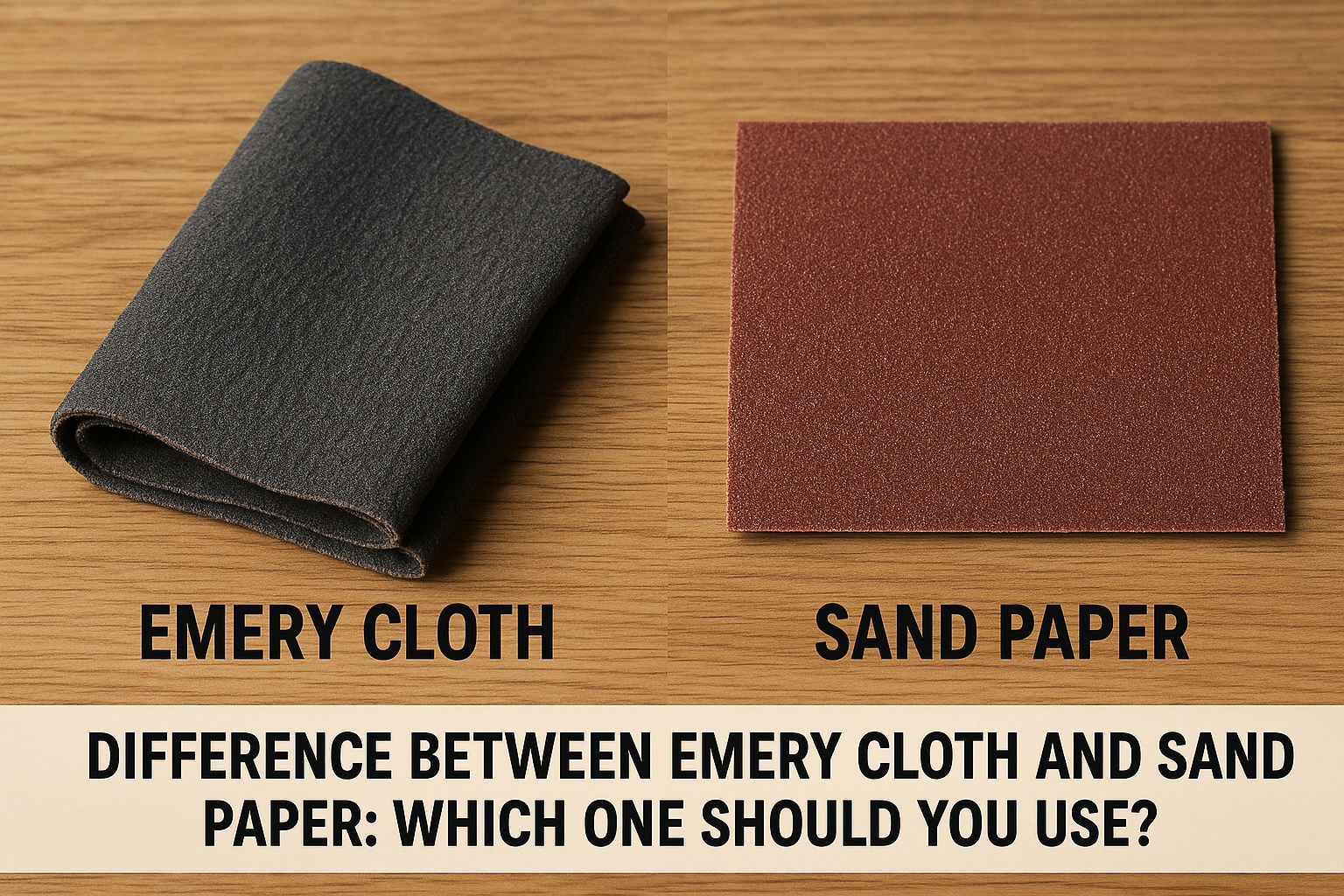
Difference Between Emery Cloth and Sand Paper
In the world of surface finishing, choosing the right abrasive material is more than just a technical decision — it directly impacts the efficiency, durability, and appearance of your finished product. Among the many abrasives available, two of the most commonly used are emery cloth and sand paper. Though they may seem similar at first glance, their structure, use, and performance vary greatly depending on the task at hand. Understanding the difference between emery cloth and sand paper helps professionals in woodworking, metalwork, automotive repair, and industrial applications achieve better results and avoid material damage.
What Is Emery Cloth and Where Is It Used?
Emery cloth is a flexible abrasive material made by bonding particles of emery (a natural mixture of corundum and magnetite) to a cloth backing. The cloth provides durability and allows the material to bend and wrap around pipes, bolts, or rounded edges without tearing, making it ideal for complex or curved surfaces.
It is widely used in metalworking, electrical maintenance, and industrial polishing, especially where the material being worked on is hard or corrosive. For example, emery cloth is commonly used to clean copper pipes before soldering, polish rusted steel parts, or smooth down welded joints.
The abrasive particles on emery cloth are generally coarser and harder than those on typical sand paper, which allows it to remove rust, oxidation, or old paint more effectively without disintegrating under pressure.
Understanding Sand Paper and Its Applications
On the other hand, sand paper — often referred to as abrasive paper — uses a paper or fiber backing coated with materials like aluminum oxide, silicon carbide, or garnet. It is more commonly associated with woodworking, drywall smoothing, and light-duty surface preparation.
Sand paper comes in a wide range of grit sizes, from coarse (for removing material quickly) to very fine (for finishing touches). It’s generally used on flat or smooth surfaces, especially in furniture making, DIY repair, and surface coating projects. However, its paper base makes it less durable, especially when used on hard or rough surfaces like metal.
For instance, using sand paper on rusted pipes or for polishing steel can lead to quick tearing, uneven abrasion, and early product failure. That’s where emery cloth outperforms it with its strength and flexibility.
Key Material Differences: Cloth vs. Paper
The backing material is the core distinction between these two abrasives. Emery cloth’s cloth base not only increases flexibility but also makes it more resistant to pressure and heat, which is crucial in high-friction polishing tasks.
Sand paper’s paper base, while easier to cut and handle, is more suited for light to medium-duty tasks. It cannot handle the same pressure or abrasion levels as emery cloth. Therefore, choosing sand paper for a heavy-duty job can result in poor performance and damaged surfaces.
Durability and Flexibility Comparison
Another important factor to consider is longevity. Emery cloth is more durable and flexible, which is ideal for wrapping around curved surfaces or getting into tight spots. It resists tearing and can be rinsed and reused in some cases.
Sand paper is less durable and tends to wear out quickly, especially when exposed to moisture or pressure. For flat and even surfaces where contouring isn’t required, it still performs well — but for irregular shapes, emery cloth wins.
Which One Should You Use for Industrial Finishing?
If your work involves high-friction tasks, metal surface preparation, or mechanical part restoration, emery cloth should be your first choice. It’s built for strength and can handle continuous pressure without breaking down. Whether you're cleaning engine parts, preparing pipes for soldering, or smoothing steel joints, emery cloth will give you a better finish and longer tool life.
However, if your project is focused on wood, painted drywall, or soft plastics, and you need affordable, easy-to-use material for light sanding, then sand paper is the more economical and appropriate choice.
Industrial and Commercial Applications in Gujarat
In Gujarat’s industrial hubs like Ahmedabad, Surat, and Rajkot, manufacturers and technicians often rely on abrasive products like emery paper, sand paper rolls, and flint paper for everyday operations. Whether it's a furniture production unit, an automotive workshop, or a plumbing service, choosing the right abrasive product boosts efficiency, lowers costs, and improves surface finishing results.
Emery Cloth vs Sand Paper – Choose Smart, Work Better
While both materials belong to the same category of abrasive finishing tools, emery cloth and sand paper serve different purposes. Your choice should depend on the material you’re working with, the pressure applied, the finish desired, and your environment. Using the wrong material not only reduces efficiency but also increases surface damage and wastage.
For consistent quality and reliable supply of emery cloth, sand paper, emery rolls, and industrial finishing abrasives, trust Maruti Industries – Ahmedabad. We manufacture a wide range of abrasive solutions for both metal and wood-based applications, offering excellent durability, grit consistency, and delivery support across Gujarat and beyond.
