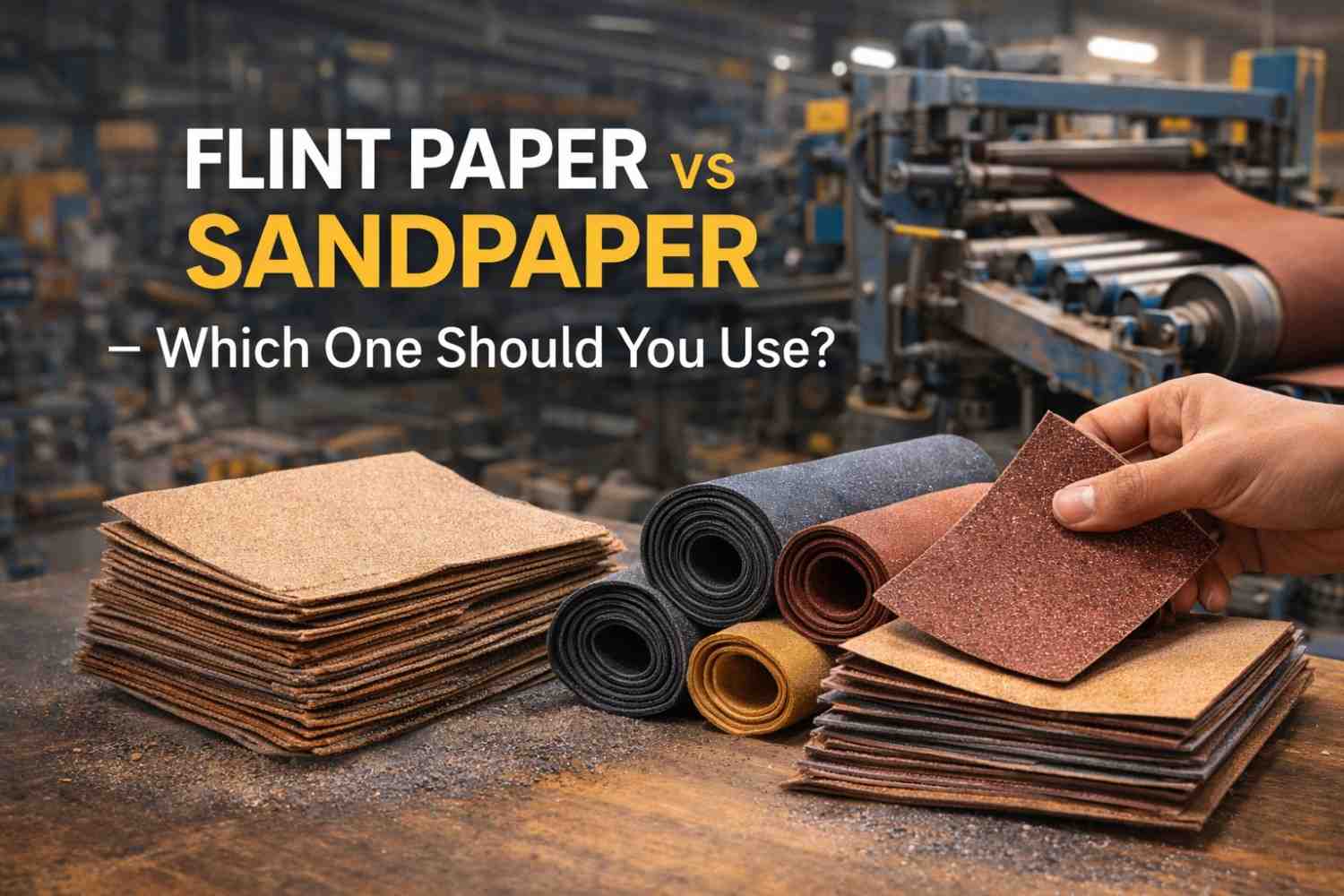
Flint Paper vs Sandpaper – Which One Should You Use for Wood Sanding and Industrial Applications in India?
Choosing between flint paper and sandpaper is a common question for carpenters, furniture manufacturers, hardware shop owners, and industrial buyers across India. Both abrasive materials are widely used for sanding and finishing surfaces, but they serve different purposes depending on the application. Understanding the difference between flint paper and sandpaper helps businesses select the correct abrasive for wood sanding, metal polishing, and industrial surface preparation. In India’s growing manufacturing and furniture industries, selecting the right abrasive paper improves finishing quality, reduces sanding time, and increases productivity. Businesses searching for reliable abrasive suppliers often prefer manufacturers that provide consistent grit quality and bulk supply across PAN India.
You can explore our abrasive products on our product page and also verify our business presence through our Google Business Profile for trusted abrasive manufacturing solutions.
What Is Flint Paper, and Where Is It Used in Wood Sanding?
Flint paper is a type of abrasive paper made using natural flint mineral bonded to a paper backing. It is commonly used in woodworking industries for sanding softwood surfaces, preparing furniture components, and finishing carpentry projects. In India, flint paper is widely used by carpenters, furniture manufacturers, plywood factories, and interior contractors. The abrasive grains on flint paper provide moderate cutting action, which makes it suitable for smoothing wood surfaces without damaging the material. Hardware shops across India often stock flint paper because it is economical and effective for manual sanding applications.
Many furniture workshops prefer flint paper when sanding doors, cabinets, and wooden panels before polishing or painting. For bulk supply and industrial abrasive requirements, businesses can contact us through our Contact Page.
What Is Sandpaper, and Why Is It Used for Industrial Sanding?
Sandpaper is a broader category of abrasive material that includes various abrasive grains, such as aluminum oxide, silicon carbide, and garnet bonded to paper or cloth backing. Sandpaper is widely used for both wood and metal sanding, surface preparation, paint removal, and polishing. In industrial environments across India, sandpaper plays a crucial role in fabrication workshops, automotive repair centers, construction industries, and furniture manufacturing units.
Unlike flint paper, sandpaper offers more versatility because it can be used on multiple surfaces, including wood, metal, plastic, and painted surfaces. Industrial buyers often choose sandpaper with aluminum oxide abrasive grains for heavy-duty sanding and metal polishing tasks.
Flint Paper vs. Sandpaper: What Is the Main Difference?
The main difference between flint paper and sandpaper lies in the abrasive mineral used and their application areas. Flint paper uses natural flint mineral and is mainly used for woodworking applications. Sandpaper, on the other hand, can contain various abrasive minerals such as aluminum oxide or silicon carbide and can be used for both wood and metal sanding.
Flint paper is usually more economical and suitable for light sanding tasks, while sandpaper offers higher durability and versatility for industrial applications. Understanding these differences helps carpenters and industrial buyers select the right abrasive paper depending on the project requirements.
Which Is Better for Wood Sanding: Flint Paper or Sandpaper?
For woodworking applications, flint paper is often the preferred choice because it is specifically designed for sanding softwood surfaces and furniture components. It provides smooth sanding results and is widely used in carpentry workshops. However, sandpaper can also be used for wood sanding, especially when aluminum oxide abrasive is used, which offers longer durability.
Furniture manufacturers in India typically use a combination of abrasive papers with different grit sizes to achieve smooth finishing results. Starting with coarse grit for material removal and progressing to fine grit for finishing ensures professional-quality sanding.
How Grit Size Affects Flint Paper and Sandpaper Performance
Grit size determines how coarse or fine an abrasive paper is. Lower grit numbers such as 40 or 60 are used for heavy material removal, while medium grits like 80 or 120 are used for general sanding. Fine grits such as 180 or 220 are used for finishing surfaces before painting or polishing.
For woodworking applications, carpenters often start with medium-grit sandpaper and finish with finer grit to achieve smooth surfaces. Proper grit progression improves sanding efficiency and surface quality.
Where to Buy Flint Paper and Sandpaper in India?
Businesses looking for high-quality flint paper and sandpaper in India should choose manufacturers that offer consistent grit quality and reliable supply. Direct sourcing from an abrasive manufacturer ensures better pricing and consistent product performance. Buyers across India can explore our abrasive range on our Flint Paper or connect through our Google Business Profile to learn more about our manufacturing capabilities and services.
Choosing Between Flint Paper and Sandpaper
Both flint paper and sandpaper play important roles in woodworking and industrial surface finishing applications. Flint paper is ideal for carpentry and furniture sanding, while sandpaper provides versatility for multiple surfaces, including wood and metal. Selecting the correct abrasive paper depends on the project requirements, grit size, and surface material. Businesses that partner with reliable abrasive manufacturers benefit from consistent quality, competitive pricing, and long-term supply stability.
Frequently Asked Questions
What is the difference between flint paper and sandpaper?
Flint paper is mainly used for wood sanding and is made from natural flint mineral, while sandpaper includes various abrasive grains and can be used for both wood and metal sanding.
Which abrasive paper is best for woodworking?
Flint paper and aluminum oxide sandpaper are commonly used for woodworking applications because they provide smooth sanding and consistent finishing.
Can sandpaper be used for metal polishing?
Yes, sandpaper with aluminum oxide abrasive grains is commonly used for metal polishing and surface preparation.
Is flint paper cheaper than sandpaper?
Flint paper is generally more economical because it is designed mainly for woodworking and light sanding applications.
