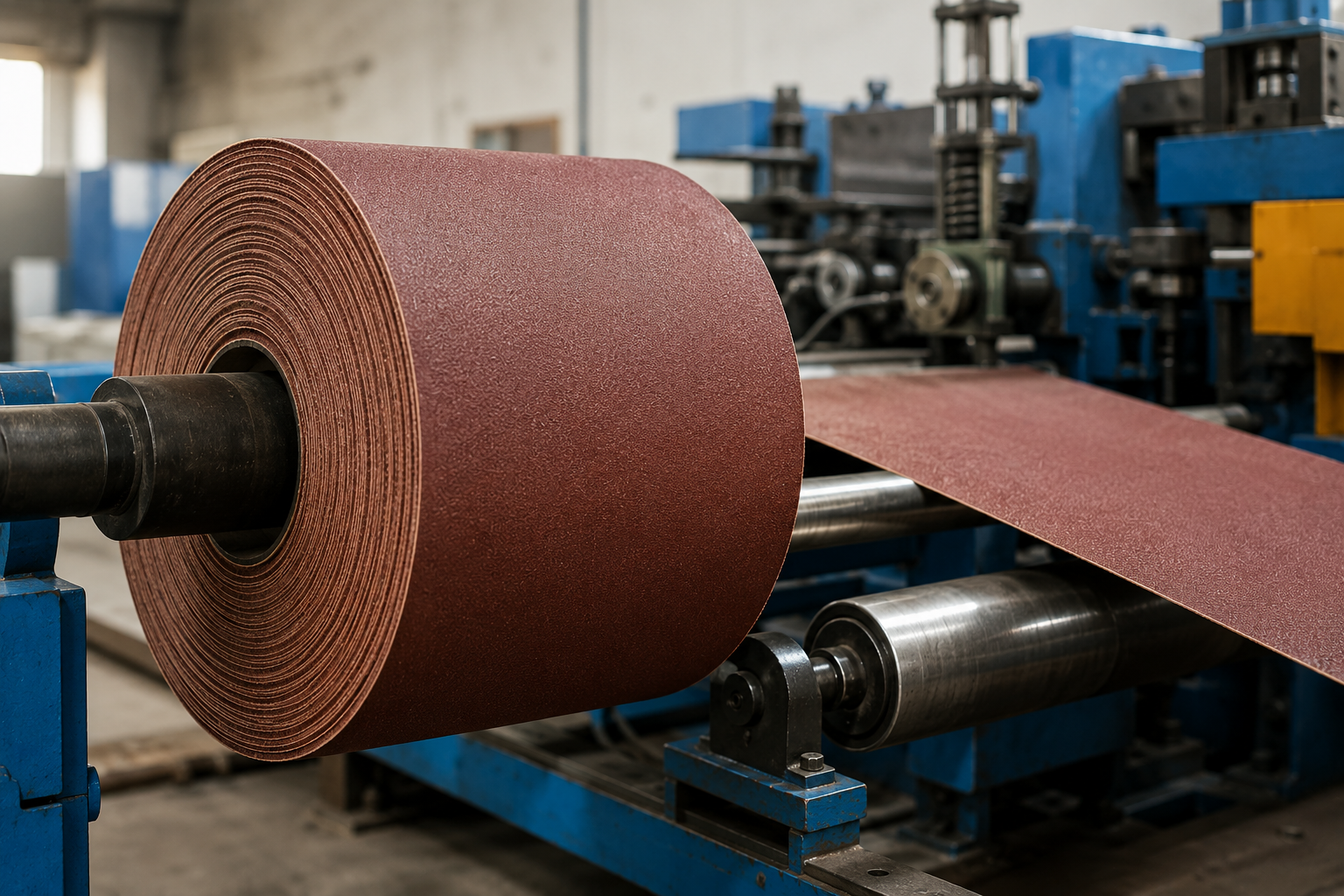
How Emery Roll is Manufactured: Complete Guide from a Leading Emery Roll Manufacturer in India
Emery rolls are among the most widely used abrasive products in manufacturing, fabrication, engineering, woodworking, and metal finishing industries. Businesses searching for a reliable Emery Roll Manufacturer in India often want to understand not only the product itself but also how it is made and why quality matters. The manufacturing process of an emery roll directly affects its durability, cutting performance, grit consistency, and finishing quality. Understanding this process helps industries select the right abrasive solution for their applications.
As a trusted Abrasive Manufacturer in India, we believe that educating customers about abrasive technology creates better purchasing decisions and improves industrial productivity. Whether you are looking for Emery Roll in Ahmedabad, Emery Roll Manufacturer in Gujarat, or industrial abrasive solutions across India, understanding the manufacturing process is the first step toward selecting the right product.
What is an Emery Roll?
An emery roll is a flexible abrasive product made by bonding abrasive grains onto a backing material such as paper or cloth. It is supplied in roll form and can be cut to different lengths based on industrial requirements. Emery rolls are commonly used for grinding, polishing, deburring, rust removal, and surface preparation.
Industries prefer emery rolls because they provide consistent abrasive action while remaining flexible enough to be used on flat, curved, and irregular surfaces. Engineering workshops, fabrication units, furniture manufacturers, and metal polishing industries rely heavily on high-quality emery rolls for day-to-day operations.
If you want to learn more about our company background and manufacturing standards, you can visit our About Us page where we explain our quality commitment and industry experience.
Step 1: Selection of High-Quality Abrasive Grains
The manufacturing process begins with selecting the right abrasive grains. The type and quality of abrasive material determine the performance of the finished emery roll.
Common abrasive materials include aluminum oxide, silicon carbide, and other industrial-grade abrasive minerals. Each abrasive grain has unique cutting characteristics suitable for different applications. Aluminum oxide is widely used for metal polishing and general-purpose sanding, while silicon carbide provides sharper cutting performance for specialized applications.
A leading Emery Roll Manufacturer in India carefully selects abrasive grains to ensure uniform cutting action and longer product life. The consistency of grain size plays a major role in producing a smooth and professional finish.
Step 2: Preparing the Backing Material
The backing material serves as the foundation of the emery roll. Depending on the intended application, manufacturers may use paper backing, cloth backing, or reinforced materials.
Paper-backed emery rolls are suitable for light and medium-duty sanding operations. Cloth-backed emery rolls are designed for heavy-duty industrial applications because they offer greater strength and durability.
Many industries searching for Sandpaper Manufacturer in India and Abrasive Supplier in Gujarat often compare paper-backed and cloth-backed products before selecting the most suitable abrasive solution.
Step 3: Applying the Adhesive Layer
Once the backing material is prepared, a specialized adhesive coating is applied. This adhesive acts as a bonding agent between the abrasive grains and the backing surface.
The quality of adhesive significantly impacts product durability. Poor bonding can result in grain loss during operation, reducing abrasive effectiveness and increasing replacement costs. Premium manufacturers use advanced bonding technologies to ensure maximum grain retention and consistent performance.
This stage is one of the most critical parts of the manufacturing process because it directly affects the life span of the emery roll.
Step 4: Coating Abrasive Grains on the Surface
After adhesive application, abrasive grains are uniformly distributed across the backing material. Modern manufacturing facilities use precision coating equipment to ensure even grain distribution.
Uniform distribution is essential because uneven coating can create inconsistent finishing results. High-quality emery rolls maintain the same abrasive performance across the entire surface, allowing operators to achieve smooth and predictable finishing.
This is one reason industries prefer working with an experienced Emery Roll Manufacturer in India that follows strict quality control procedures.
Step 5: Drying and Curing Process
Following grain application, the coated material undergoes a controlled drying and curing process. During this stage, the adhesive hardens and securely bonds the abrasive grains to the backing material.
Temperature, humidity, and curing duration must be carefully controlled to achieve maximum product strength. Improper curing can weaken the abrasive structure and reduce performance.
Advanced manufacturing facilities invest heavily in curing technology because it ensures durability, grit stability, and long-term reliability.
Step 6: Converting Sheets into Emery Rolls
After curing is completed, large coated sheets are converted into roll form. Specialized cutting and rolling machines ensure consistent dimensions and precise roll formation.
Depending on customer requirements, manufacturers produce emery rolls in various widths, lengths, and grit sizes. Custom specifications are often available for industrial applications requiring unique abrasive solutions.
Businesses looking for industrial abrasive products can explore our Services page to view the complete range of abrasive solutions available.
Step 7: Quality Testing and Inspection
Before an emery roll reaches the customer, it undergoes rigorous quality testing. This stage ensures that every roll meets industry standards and customer expectations.
Manufacturers test:
- Grit consistency
- Adhesion strength
- Backing durability
- Flexibility
- Cutting performance
- Wear resistance
A reliable Abrasive Manufacturer in Gujarat performs detailed inspections to ensure consistent quality across every production batch.
How Grit Size Affects Emery Roll Performance
One of the most important factors in abrasive selection is grit size. Different applications require different levels of abrasiveness.
Coarse grit emery rolls are ideal for heavy material removal and rough grinding. Medium grit options are used for smoothing surfaces and preparing them for finishing. Fine grit emery rolls are designed for polishing and achieving premium surface quality.
Choosing the correct grit size improves efficiency, reduces rework, and enhances finishing quality. If you need help selecting the right grit, visit our Contact Us page for expert assistance.
Industries That Use Emery Rolls
Emery rolls are widely used across multiple industries throughout India.
Engineering industries use emery rolls for metal finishing and deburring. Fabrication workshops rely on them for grinding and surface preparation. Woodworking businesses use abrasive rolls for smoothing and finishing furniture components. Automotive industries depend on emery rolls for paint preparation and polishing applications.
Because of their versatility, emery rolls remain one of the most popular abrasive products in the industrial sector.
Why Businesses Choose Trusted Emery Roll Manufacturers
Industrial buyers often search for the best Emery Roll Manufacturer in India because product quality directly impacts productivity. A trusted manufacturer provides consistent performance, reliable supply, multiple grit options, and technical expertise.
Businesses also prefer suppliers who maintain transparent manufacturing standards and positive customer reviews. You can check our Google Business Profile to see customer feedback and learn why industries trust our abrasive solutions.
Conclusion
The manufacturing process of an emery roll involves multiple stages, from abrasive grain selection and backing preparation to curing, converting, and quality testing. Every stage contributes to the final performance of the product.
When choosing an Emery Roll Manufacturer in India, quality should always be a priority. High-quality emery rolls improve surface finishing, increase productivity, and reduce operational costs.
Whether you are looking for Emery Roll in Ahmedabad, Sandpaper Manufacturer in India, Abrasive Manufacturer in Gujarat, or complete industrial abrasive solutions, understanding the manufacturing process helps you make informed decisions and achieve better finishing results.
Frequently Asked Questions
What is an emery roll used for?
Emery rolls are used for grinding, polishing, deburring, rust removal, and surface preparation across various industries.
How is an emery roll manufactured?
An emery roll is manufactured by bonding abrasive grains onto paper or cloth backing, followed by curing, converting, and quality testing.
Which industries use emery rolls?
Engineering, fabrication, automotive, woodworking, furniture manufacturing, and metal polishing industries use emery rolls extensively.
How do I choose the right grit size?
Coarse grit is suitable for heavy material removal, medium grit for smoothing, and fine grit for polishing and finishing.
Where can I buy high-quality emery rolls in India?
You can purchase premium emery rolls from a trusted Emery Roll Manufacturer in India that offers consistent quality, expert support, and reliable supply.
